9 Best Custom Outdoor Infrared Saunas in 2026
Most backyard sauna buyers discover the weather problem only after installation. Cold snaps, rain, and UV exposure test every seal, panel, and heater, and a unit that fails those tests is an expensive mistake. Many shoppers also switch because their current setup never delivered real infrared heat or red light.
This guide breaks down heater type, EMF levels, red light therapy, weather sealing, and installation requirements. You will get a clear comparison of nine outdoor infrared saunas and a specific number one pick, so you can choose the right unit for your climate and space.
What to Look For in Custom Outdoor Infrared Saunas
Before comparing specific brands, it helps to understand the technical and structural factors that separate a durable, effective outdoor infrared sauna from a compromised one. A custom outdoor unit has to pass two different tests at once, and a weakness in either one undermines the whole purchase.
The first test is sauna performance. That means heater type, EMF and ELF output, red light capability, and enough wattage to heat the cabin properly. The second is outdoor durability: weather sealing, wood choice, roof design, glazing, and whether your home's electrical setup can support the unit.
Many buyers focus on the cabin's look and skip the specifications underneath. That order tends to produce regret, because a beautiful barrel sauna with a weak heater or leaky door seals will disappoint in year one. The two sections below break down the criteria that matter most in this outdoor sauna buying guide, so you can read the 2026 sauna models in this roundup with a clear checklist in hand.
Heater Type, EMF Levels, and Red Light Therapy
The heater is the engine of any infrared sauna, and the differences between carbon fiber panels, ceramic emitters, and full-spectrum systems directly affect heat feel, warm-up time, and your exposure to EMF and ELF. Understanding these trade-offs is the core of evaluating any far-infrared sauna or near-infrared sauna design.
Carbon fiber heating panels produce a broad, gentle far-infrared heat and are common in low EMF heaters. Ceramic infrared emitters warm up faster and run hotter at the surface. Full-spectrum infrared heaters combine far, mid, and near infrared in one cabin, which is why they appear so often in premium custom builds.
EMF stands for electromagnetic fields, typically measured in milligauss (mG), while ELF refers to extremely low frequency electric fields. Premium low-EMF heaters often emit under 3 mG, and best-in-class designs claim under 0.5 mG. ELF should be very low as well. Ask any manufacturer for EMF and ELF test data before you buy, and treat unverified claims with caution.
Wattage shapes warm-up time and cabin size. A 120V sauna is usually plug-and-play at roughly 1,500 to 1,800W and warms up in about 15 to 25 minutes. A 240V sauna is typically hardwired at 3,000 to 6,000W, which supports faster recovery between sessions and larger cabins.
Red light therapy adds another layer. The clinical wavelengths are 660nm red and 850nm near-infrared, and distance from skin matters. LEDs positioned 2 to 6 inches from the body deliver far more usable light than overhead panels mounted near the ceiling. Request wavelength and placement specs, not just the presence of red LEDs.
Weather Sealing, Materials, and Installation Requirements
An outdoor sauna has to survive rain, snow, and sun while keeping heat in, so the exterior envelope and material choices matter as much as the heater. A weather-resistant exterior starts with details buyers often overlook.
- Gasketed doors and sealed seams to block drafts and moisture intrusion
- Roof overhangs that shed water away from walls and door frames
- Raised floor framing that keeps the base off wet ground and allows airflow
Wood selection drives both longevity and feel. Canadian red cedar is aromatic, naturally rot-resistant, and considered a premium choice. Hemlock is budget-friendly but usually needs treatment. Thermowood spruce is heat-treated for stability and weather resistance, while a basswood interior offers a comfortable, low-resin surface for the bench and backrest.
Roofs come in two main styles. A cedar shingle roof looks classic and insulates well but needs more upkeep. An aluminum roof sauna sheds water easily and demands less maintenance. Glazing matters too: a tempered glass door holds heat better than thin panels, while a panoramic window sauna trades some heat retention for a view. Weigh that trade-off against how you plan to use the cabin.
Installation falls into two categories. A 120V plug-and-play sauna suits smaller cabins and standard outlets. A 240V hardwired sauna requires an electrician and often a permit, so budget for that early. Most custom builds also need a level pad or deck as a foundation, and lead times for made-to-order cabins can run weeks to months depending on the builder.
1. SaunaCloud - Best Overall
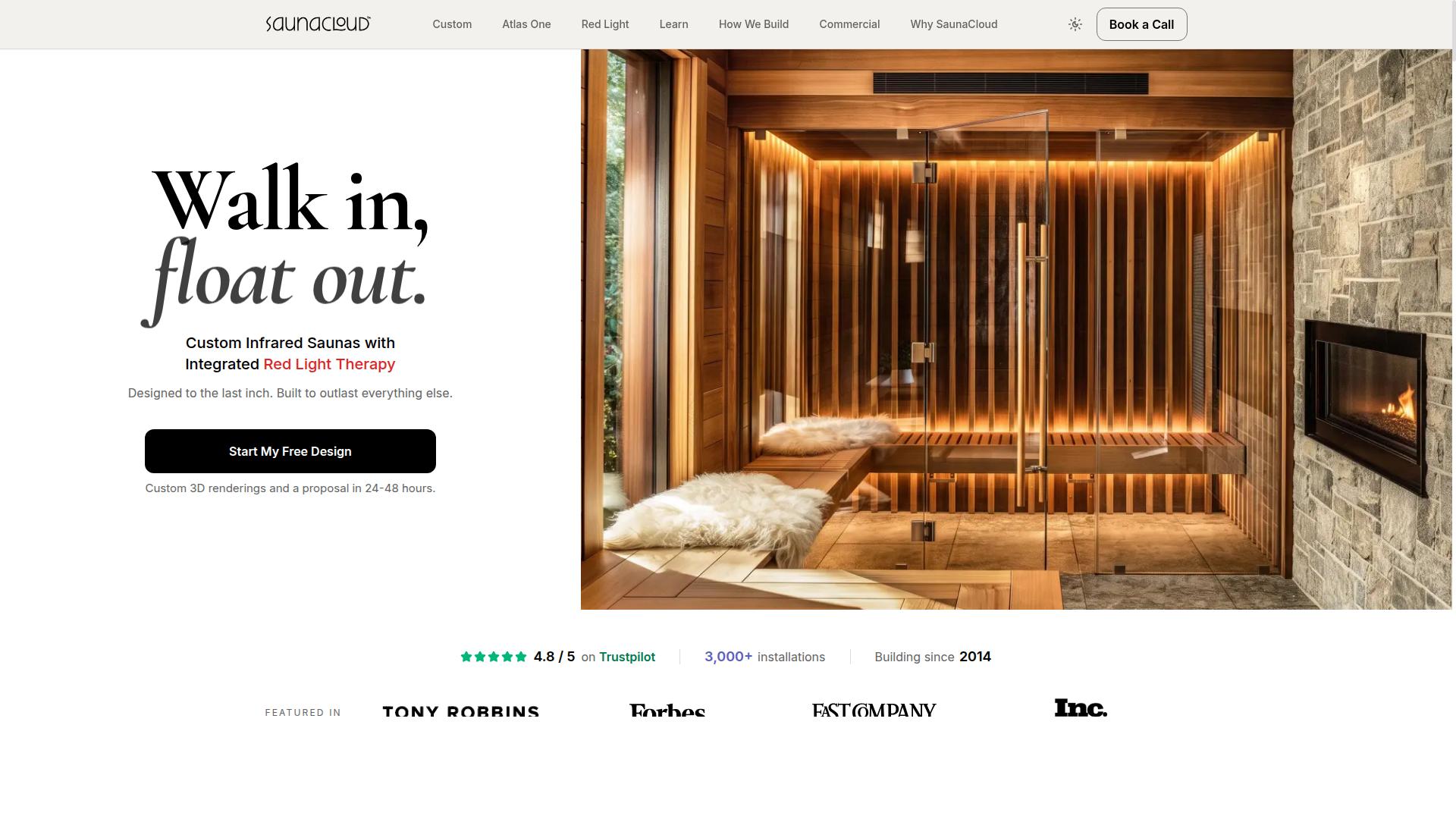
SaunaCloud earns the top spot for buyers who want a fully custom outdoor infrared sauna with clinical-grade red light therapy built into the seating rather than bolted on as an aftermarket panel. The company was founded in 2014 in Diamond Springs, California, and has completed more than 3,000 installations across North America.
What separates SaunaCloud from most names in the outdoor sauna buying guide is vertical integration. Heaters, power supplies, control boards, and red light arrays are all designed and built in-house, so the finished unit is a matched system rather than an assembly of third-party parts.
Every order ships as a complete kit with all components and fasteners included, and each sauna carries a 7-year limited lifetime warranty. For 2026 sauna models, that combination of custom sizing and in-house engineering is hard to match.
Custom Atlas and Sierra Models Built In-House
SaunaCloud's Atlas and Sierra models are engineered and handcrafted in-house, which lets buyers specify dimensions, wood, and layout rather than choosing from a fixed catalog. Both are true custom outdoor infrared sauna builds, configured around the space you actually have.
The heating core is the VantaWave® ultra-low-EMF carbon heater. These carbon fiber heating panels emit under 3 mG, often below 0.5 mG, which matters for anyone comparing low EMF heaters in a far-infrared sauna. Surface temperature reaches 190°F with a peak wavelength of 7.9 microns, squarely in the far-infrared range the body absorbs most readily.
Red light therapy is integrated into the benches and backrests rather than added as a separate panel. The arrays combine 660nm red and 850nm near-infrared LEDs positioned 2 to 6 inches from the skin, a clinical proximity that aftermarket panels rarely achieve in a near-infrared sauna.
Construction uses premium Western Red Cedar, a cedar wood sauna material chosen for outdoor durability, with weather-sealed exteriors finished in cedar and stainless steel. Each unit is built to order and arrives with detailed installation plans plus phone and video support during the build.
Every kit includes heaters, the control system, power supply, cedar, and fasteners, so nothing extra needs sourcing. Wi-Fi controls come standard, and the same 7-year limited lifetime warranty applies. Pricing is handled through custom quotes based on your configuration.
- Atlas and Sierra: custom outdoor infrared sauna platforms sized to your space
- VantaWave® heaters: under 3 mG EMF, 190°F surface, 7.9 micron peak
- Integrated red light: 660nm and 850nm LEDs at 2 to 6 inches from skin
- Complete kit: heaters, controls, power supply, cedar, and fasteners included
- Support: installation plans with phone and video guidance
2. Sunlighten
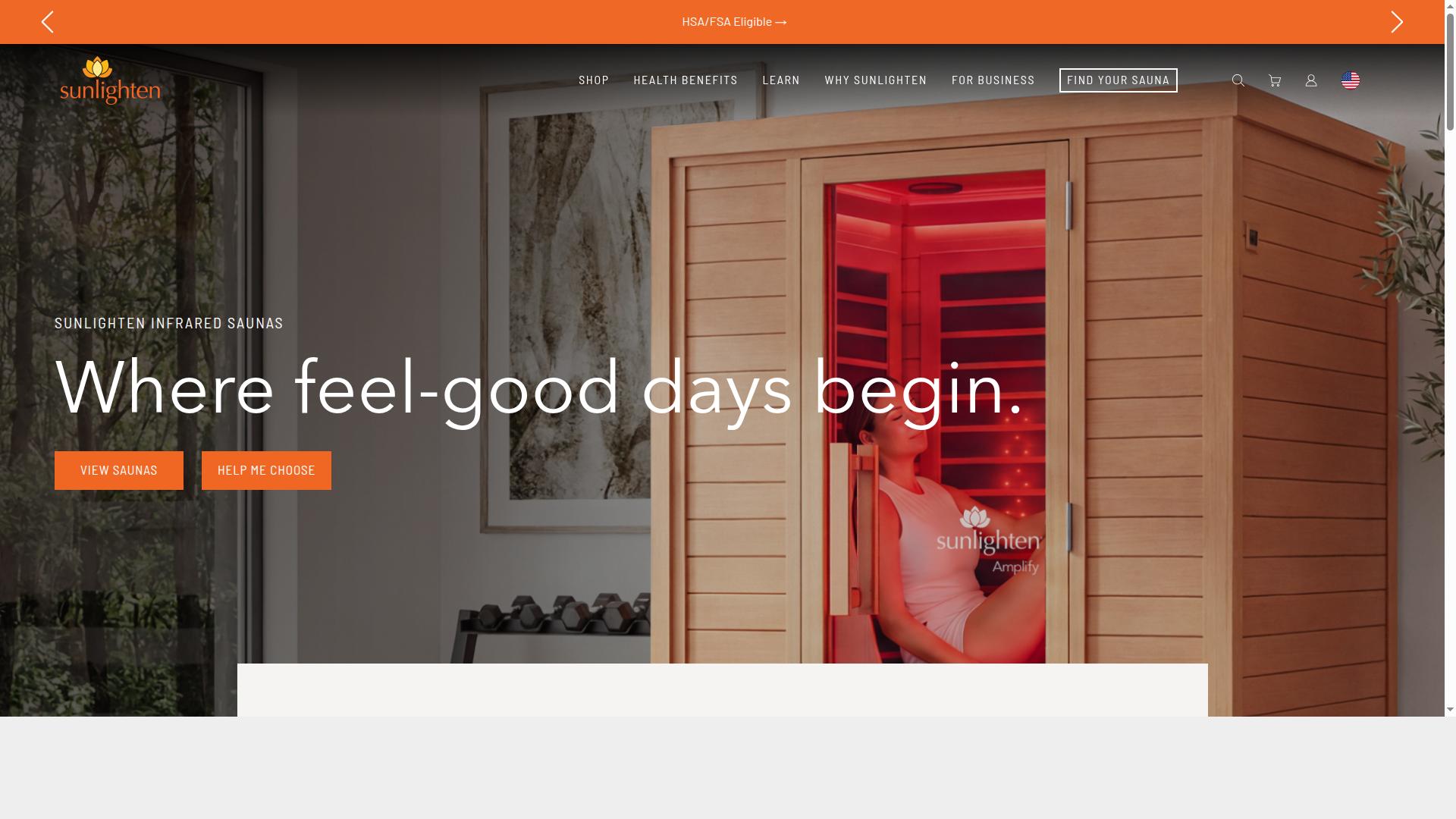
Sunlighten is one of the most recognized names in infrared saunas, known for its full-spectrum heater technology and a broad lineup that includes outdoor-capable models. For shoppers building a shortlist of the best infrared sauna brands, it is a familiar reference point.
The company positions itself at the premium end of the market. Its marketing leans heavily on proprietary heater designs and wellness-focused messaging, which is typical for brands competing in the full-spectrum infrared category.
Sunlighten offers several distinct sauna lines, each built around a different heating approach. The lineup gives buyers options across heater type and cabin style, though exact outdoor configurations should be confirmed with the brand.
- mPulse Smart Sauna: described as a patented 3 in 1 full spectrum sauna with customizable near, mid, and far wavelengths.
- Signature Far Infrared Sauna: uses SoloCarbon heating for a far-infrared sauna experience.
- Amplify Full Spectrum Sauna: a full-spectrum model aimed at buyers who want the widest wavelength range.
On the safety side, Sunlighten states that its heater panels were tested by Vitatech Electromagnetics and measured less than 1 mG, with some as low as 0.1 mG and 0.5 mG or less. The brand describes these readings as lower than 95 percent of common household devices. Buyers comparing low EMF heaters should treat these as manufacturer-reported figures and ask for current documentation.
Because this is a custom outdoor infrared sauna purchase, several details deserve direct confirmation before ordering. Outdoor suitability, weather resistance of the exterior, and heater placement in an exposed setting are the first items to verify.
Ask the brand about EMF and ELF levels for the specific model you are considering, since readings can vary by heater panel. Red light specifications also warrant a direct question if near-infrared or red light output matters to you.
Other practical points fit any outdoor sauna buying guide. Confirm whether a given model is a 120V sauna or a 240V sauna, whether it is plug-and-play or hardwired, and what sauna heater wattage is required for your space.
Finally, check wood and construction choices such as cedar wood, Canadian red cedar, or thermowood spruce, along with roof type and glass options. Sunlighten's premium positioning means careful comparison pays off, and confirming these details directly with the brand keeps your 2026 sauna models shortlist grounded in facts.
3. Finnleo
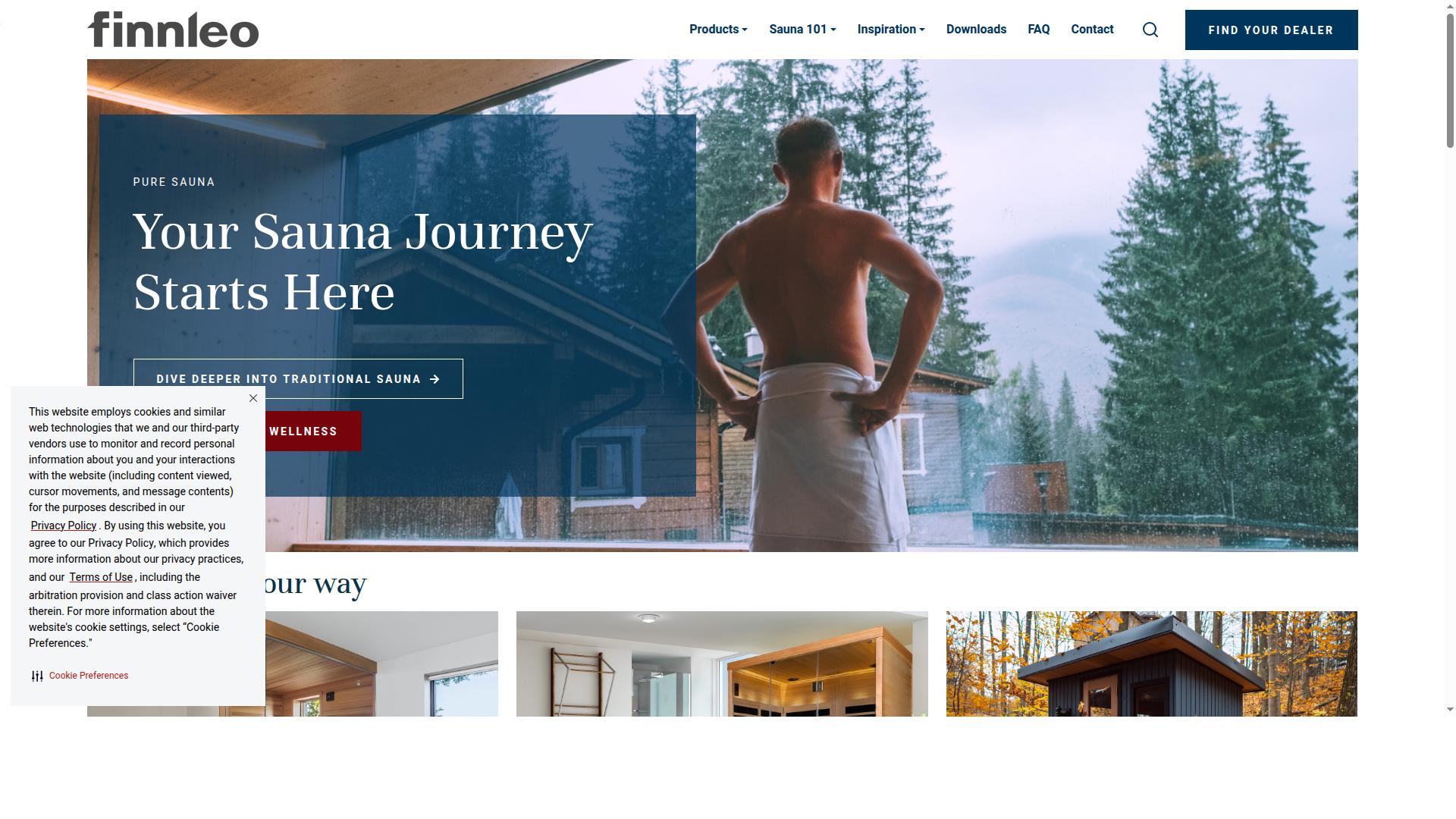
Finnleo brings decades of Finnish sauna heritage to the infrared category, with a dealer-based model and a reputation for traditional craftsmanship. The company is part of Sauna360 Inc, based in Cokato, Minnesota, and draws on more than 100 years of combined sauna experience.
That background matters for buyers weighing a custom outdoor infrared sauna. Finnleo sits in an unusual spot: it builds both traditional Finnish rooms and infrared models, so a buyer can compare heater styles under one roof rather than across two brands.
For shoppers comparing the best infrared sauna brands in 2026, Finnleo is a credible name. The catch is that most of the detail you need lives with your local dealer, not on a single national spec sheet.
Finnleo's traditional lineup is well documented. Indoor options include the Hallmark, a free-standing portable design in three sizes, and the NorthStar, made in Minnesota in four standard sizes. The Designer series offers deluxe modular rooms in four styles, and the brand also builds custom modular or permanent saunas.
Heater choices span electric and wood-burning configurations. The SaunaLogic2 control can be operated at the sauna or from a phone, which suits homeowners who want to heat the room before they walk outside.
On the infrared side, Finnleo states that its rooms use low EMR and low EF technology. The company does not publish a detailed heater breakdown for every model, so confirm the emitter type, whether full-spectrum infrared heaters or a narrower band, directly with your dealer.
Outdoor models and heater configurations vary by dealer, and that is the single most important thing to know before you shop. Two Finnleo dealers may stock different outdoor lines, finishes, and control options.
Ask specific questions rather than relying on a brochure:
- Which outdoor models can be ordered in my region, and what exterior materials are standard?
- What are the measured EMF and ELF levels for the exact infrared model I am considering?
- Is the unit 120V sauna plug-and-play or a 240V sauna that needs a hardwired circuit?
- What heater wattage does the room require, and does that match my panel capacity?
- Who handles delivery, site prep, and installation, and what does the warranty cover?
Verify materials too. Ask whether the interior is cedar wood sauna paneling, hemlock, or another species, and confirm the exterior is genuinely weather-resistant for your climate.
Finnleo's dealer network is a real advantage for buyers who want to see and touch a sauna before committing. A showroom visit lets you check door fit, bench depth, and the feel of the interior wood, details that photos rarely capture.
It also means pricing is quoted locally rather than listed publicly, so budget conversations happen with your dealer. Treat any figure you see online as a starting point and confirm it in writing.
For a custom outdoor infrared sauna, ask how much of the build is truly bespoke. Finnleo offers custom modular and permanent traditional rooms, but infrared customization may be narrower. Confirm which choices are open to you: size, exterior cladding, roof style, and door or window layout.
Finally, check lead times and service coverage. A dealer-based purchase is only as good as the local support behind it, so ask who answers a service call in year three.
Finnleo suits buyers who value heritage, want to compare traditional and infrared side by side, and prefer a local dealer relationship over an online order. The brand's long track record and Minnesota manufacturing base give it real credibility.
It is a weaker fit for shoppers who want transparent published specs, fixed online pricing, and a quick plug-and-play setup without a dealer conversation. Those buyers will do more legwork here.
Weigh Finnleo against the rest of this list on three points: how much customization you actually need, whether you want far-infrared sauna panels or a broader spectrum, and how comfortable you are verifying EMF, materials, and electrical requirements yourself. If a dealer can answer those questions clearly, Finnleo deserves a serious look in your 2026 shortlist.
4. Clearlight
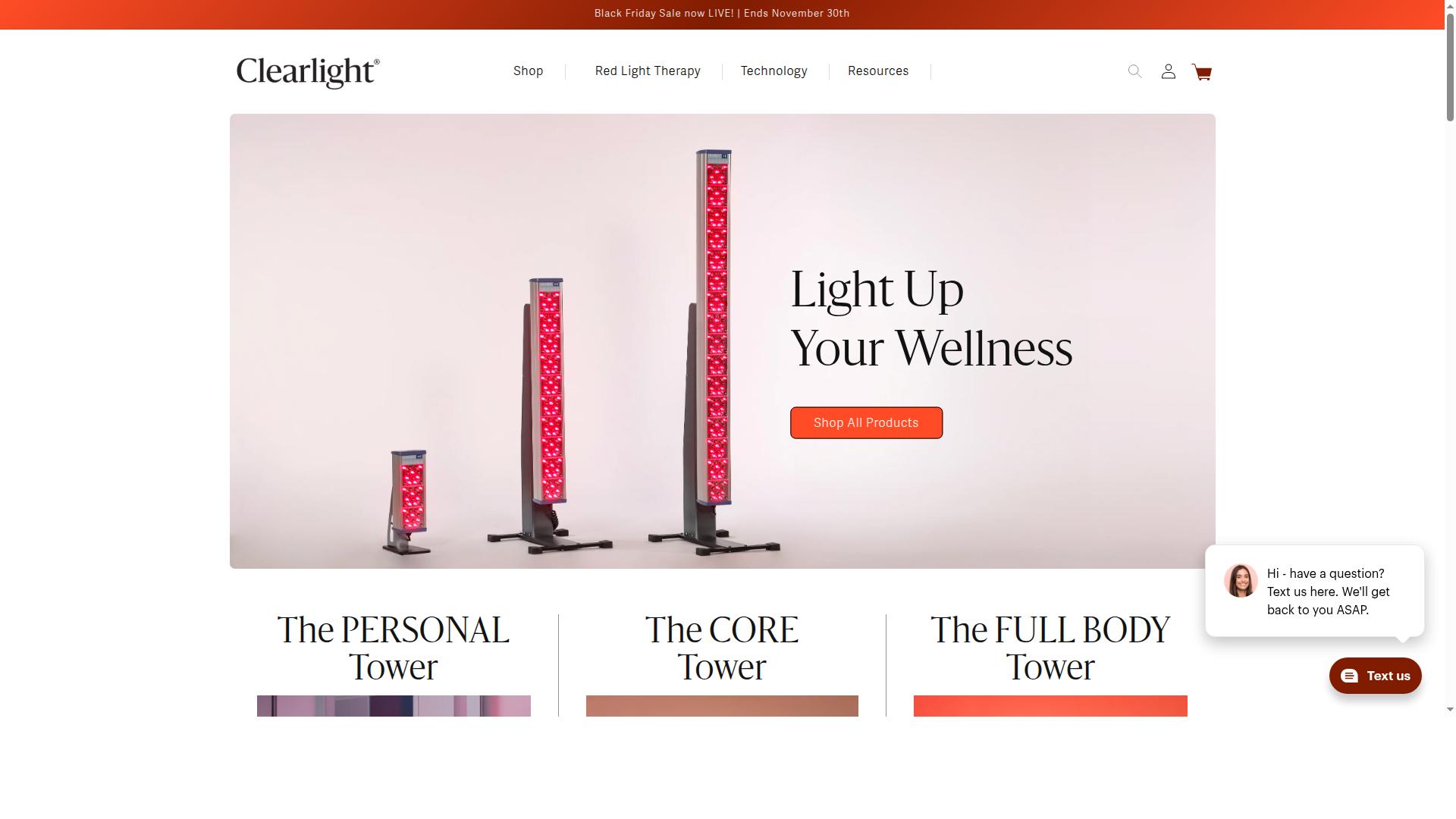
Clearlight is frequently cited for its low-EMF and low-ELF claims, making it a common reference point for health-conscious buyers. The brand appears in Forbes Vetted's 2026 best home saunas guide, which places it among the names shoppers encounter when comparing options.
That listing confirms recognition, but it does not document specific models, heater configurations, or outdoor readiness. Buyers should treat the brand's reputation as a starting point for their own research, not a finished verdict.
For anyone building a shortlist of the best infrared sauna brands, Clearlight is worth a closer look, with a few verification steps along the way.
Clearlight's identity rests largely on its low EMF and low ELF positioning. EMF refers to electromagnetic fields and ELF to extremely low frequency fields, both of which health-focused sauna shoppers often track. The brand is commonly discussed in those terms, and that framing is a big part of why it lands on so many comparison lists.
Because these are marketing claims rather than published test results in the sources reviewed, buyers should request third-party EMF test data before committing. Ask for measurements taken at typical seating distance, not just at the heater. A clear report is more useful than a badge or a slogan.
It also helps to ask which body positions were tested. Field strength can vary with distance from the heaters, so a reading at the bench tells you more than one taken at the door.
Clearlight is also associated with full-spectrum options, which typically combine far-infrared, mid-infrared, and near-infrared wavelengths. Full-spectrum cabins usually pair carbon fiber heating panels or ceramic infrared emitters with near-infrared lamps, though exact configurations vary by model.
Red light features are another area where specifications differ from one model to the next. Some configurations include red light elements and others do not, so confirm what is actually included before comparing prices. Do not assume a feature carries across the whole lineup.
Wavelength coverage, heater type, and red light inclusion all affect both cost and the sauna experience. Shoppers should map those details to their own priorities rather than assuming every Clearlight cabin is built the same way.
Clearlight offers some outdoor models, but outdoor use raises questions that indoor listings do not answer. Weather sealing is the first thing to verify. Ask how the roof, door, and panel joints handle rain, snow, and humidity over time.
Exterior materials matter just as much. Whether the cabin uses cedar, thermowood spruce, or another weather-resistant exterior, confirm the finish and any recommended maintenance schedule. A cedar shingle roof and an aluminum roof sauna age very differently.
- Confirm the outdoor model is rated for year-round exposure in your climate.
- Ask how the tempered glass door and any panoramic window are sealed.
- Request the EMF and ELF test documentation for the specific model.
- Check the heater type, wattage, and whether the unit is 120V or 240V.
- Clarify red light and full-spectrum inclusions for that exact configuration.
These checks apply to any custom outdoor infrared sauna purchase, and they matter most when a brand's reputation rests on technical claims. Get the answers in writing before you decide.
5. Finnmark Designs
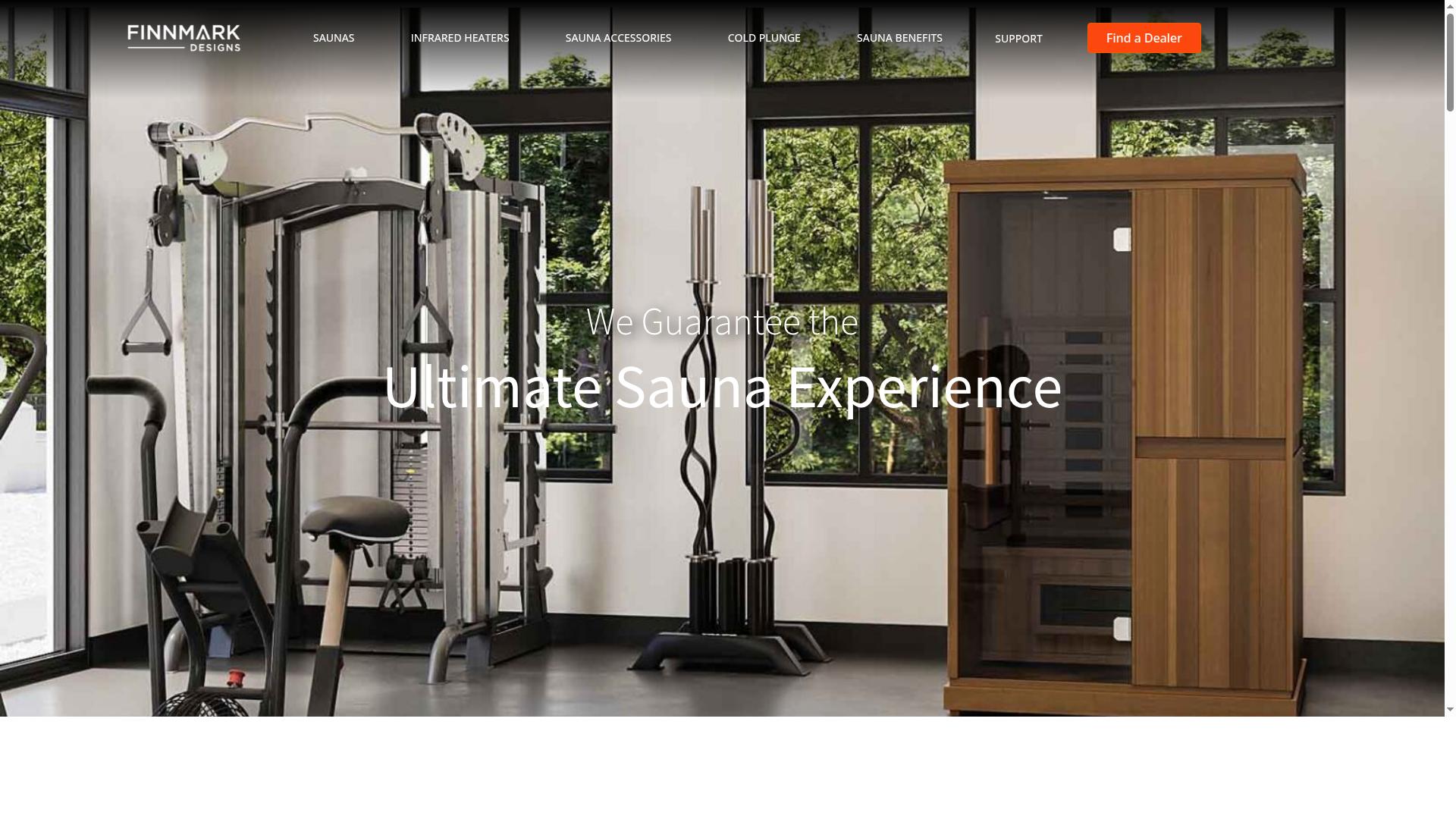
Finnmark Designs focuses on full-spectrum infrared saunas with a reputation for strong build quality and accessible entry points. The lineup spans a compact home cabin through to hybrid barrel models, giving buyers several paths into the full-spectrum category.
Full-spectrum means the heater mix is designed to cover near, mid, and far infrared ranges rather than far infrared alone. In practice that usually combines ceramic infrared emitters for the hotter near-infrared band with carbon fiber heating panels for gentler, broader coverage. Buyers who want a near-infrared sauna experience alongside traditional far-infrared warmth tend to gravitate toward this style.
For outdoor placement, Finnmark's hybrid barrel options are the most relevant part of the range. A barrel sauna shape sheds rain and snow more readily than a flat-roofed cabin, and the listed hybrid barrel models are built around cedar construction. Still, "hybrid" describes the heater setup, not necessarily an outdoor rating, so confirm how each model is intended to be sited.
Published listings through Heavenly Sauna show the following models and starting prices. Treat these as reference points only, since promotions and configurations shift.
| Model | Listed Price | Notes |
|---|---|---|
| Finnmark Full Spectrum Home Infrared Sauna | from $5,045.00 | Entry point into the full-spectrum range |
| Finnmark Trinity Home Hybrid Sauna | from $8,145.00 | Hybrid heater configuration |
| Finnmark Cedar 6x6 Hybrid Barrel Sauna | Sale $10,345.00 (original $10,995.00) | Cedar barrel build |
| Finnmark Thermo-Aspen 6x6 Hybrid Barrel Sauna | Sale $9,845.00 (original $10,495.00) | Thermo-Aspen timber |
| Finnmark SoulCold 1-Person Cold/Hot Plunge | Sale $6,990.00 (original $9,320.00) | Contrast therapy add-on |
Before ordering, verify the practical details that decide whether a unit suits your space. Ask the manufacturer directly about sauna heater wattage and the electrical circuit each model needs. A smaller cabin may run on a 120V sauna circuit, while larger hybrid and barrel models typically call for a dedicated 240V sauna line, which often means a hardwired sauna install rather than a plug-and-play sauna setup.
Outdoor suitability deserves the same scrutiny. Ask whether the model carries an explicit outdoor rating, how the roof and door are sealed, and what maintenance the exterior timber requires in your climate. Finnmark also sells accessories such as a waterproof sauna cover, a curve backrest, and a vinyl cushion, which help but do not replace a proper weather-resistant build.
Other points worth confirming with the seller include heater low EMF and low ELF specifications, the interior wood used (basswood is common in this segment), and whether delivery includes placement. None of these should be assumed from a product page alone. A short call or email before purchase settles them quickly.
Where Finnmark fits in a custom outdoor infrared sauna search: it is a credible full-spectrum option with a clear size ladder and published pricing, and the barrel models are the natural starting point for outdoor use. Buyers who need a confirmed outdoor rating, specific voltage planning, or a bespoke footprint should confirm those details first and compare against other best infrared sauna brands in this outdoor sauna buying guide.
6. Heritage Saunas
Heritage Saunas caters to buyers who want traditional wood craftsmanship, with barrel and cabin styles that suit outdoor settings. The brand sells both indoor and outdoor saunas for 1 to 10 people, along with cold plunges, bundles, and accessories such as red light panels, infrared panels, LED lights, and heaters.
Its catalog runs to 58 products, filterable by heat type (Dry, Infrared, Hybrid), indoor or outdoor placement, porch, shape (barrel, cabin, modern), size, dimensions, window options, and wood type. Wood choices include Aspen, Cedar, Pine, Spruce, ThermoWood, and Hemlock, which gives buyers real flexibility in matching a custom outdoor infrared sauna to a deck or yard.
Because Heritage spans dry, infrared, and hybrid heat types, the listing for any given model deserves a close read. A barrel sauna in cedar may be built around a traditional heater rather than carbon fiber heating panels. Buyers shopping specifically for infrared should confirm the heater type before ordering.
For outdoor use, check how each model handles weather. Confirm the roof style, door sealing, and whether the exterior is finished for year-round exposure. The brand also offers bundles like The Essentialist Outdoor, The Essentialist Indoor, The Family, and The Host, which pair saunas with accessories.
A short checklist helps when comparing Heritage models for a custom outdoor infrared sauna in 2026:
- Heater type: confirm infrared, dry, or hybrid, and whether the emitters are carbon fiber panels or ceramic elements.
- EMF and ELF specs: ask for low EMF heater details if that matters to you.
- Weather sealing: verify roof, door, and exterior treatment for outdoor placement.
- Electrical needs: confirm whether the model is a 120V sauna or requires a 240V hardwired circuit.
- Wood and size: match cedar, ThermoWood, or hemlock to your climate and space.
Heritage notes free shipping on orders over 300, though product pricing is not stated publicly, so confirm costs directly. Overall, it is a credible pick for wood-focused shoppers who value cabin and barrel character, provided they verify the infrared and outdoor details first.
7. Bear North Sauna
Bear North Sauna is a smaller, craft-oriented brand that appeals to buyers looking for rugged outdoor sauna builds. Based in Osage, Minnesota, it positions itself as a sauna resource for Northern Minnesota, a region where cold winters make a hot outdoor sauna a genuinely practical routine rather than a luxury.
That regional focus shapes what the brand offers. Instead of a large catalog of standardized models, Bear North describes custom builds for homes or cabins, along with sauna stoves or heaters, sauna kits, and accessories. For a buyer weighing a custom outdoor infrared sauna in 2026, this is a builder-first operation rather than a mass-market retailer.
The brand also frames sauna use as a habit, aiming to help customers make saunas part of a daily or weekly routine. That mindset tends to suit homeowners and cabin owners who want a permanent outdoor installation, not a temporary add-on.
Because Bear North does not publish detailed specs or pricing on its listing, treat it as a starting point for a conversation. The listing provides a phone number, (218) 255-1851, and hours of 8:00 AM to 5:00 PM Monday through Friday, closed Saturday and Sunday.
Before committing, confirm the practical details directly with the builder:
- Heater options, including whether infrared panels, ceramic infrared emitters, or a traditional stove are available for an outdoor build.
- Wood choices, such as cedar, hemlock, or thermowood spruce, and how each holds up to weather.
- Exterior details, from roof style to weather-resistant cladding and door glazing.
- Lead times, since custom fabrication schedules vary by season and workload.
- Electrical requirements, whether a 120V sauna or a hardwired 240V setup fits your site.
For buyers comparing the best infrared sauna brands, Bear North fits a specific profile. It is a strong fit if you want a custom outdoor infrared sauna tailored to a cabin or a northern climate and you are comfortable picking up the phone to work through specifications.
It is a weaker fit if you want published specs, transparent online pricing, or a plug-and-play sauna shipped as a finished package. In those cases, a brand with a fuller online catalog, such as SaunaCloud, is easier to evaluate before you buy. Use the outdoor sauna buying guide approach here: ask about heater type, wood species, and lead time first, and let the answers decide.
8. Peak Saunas
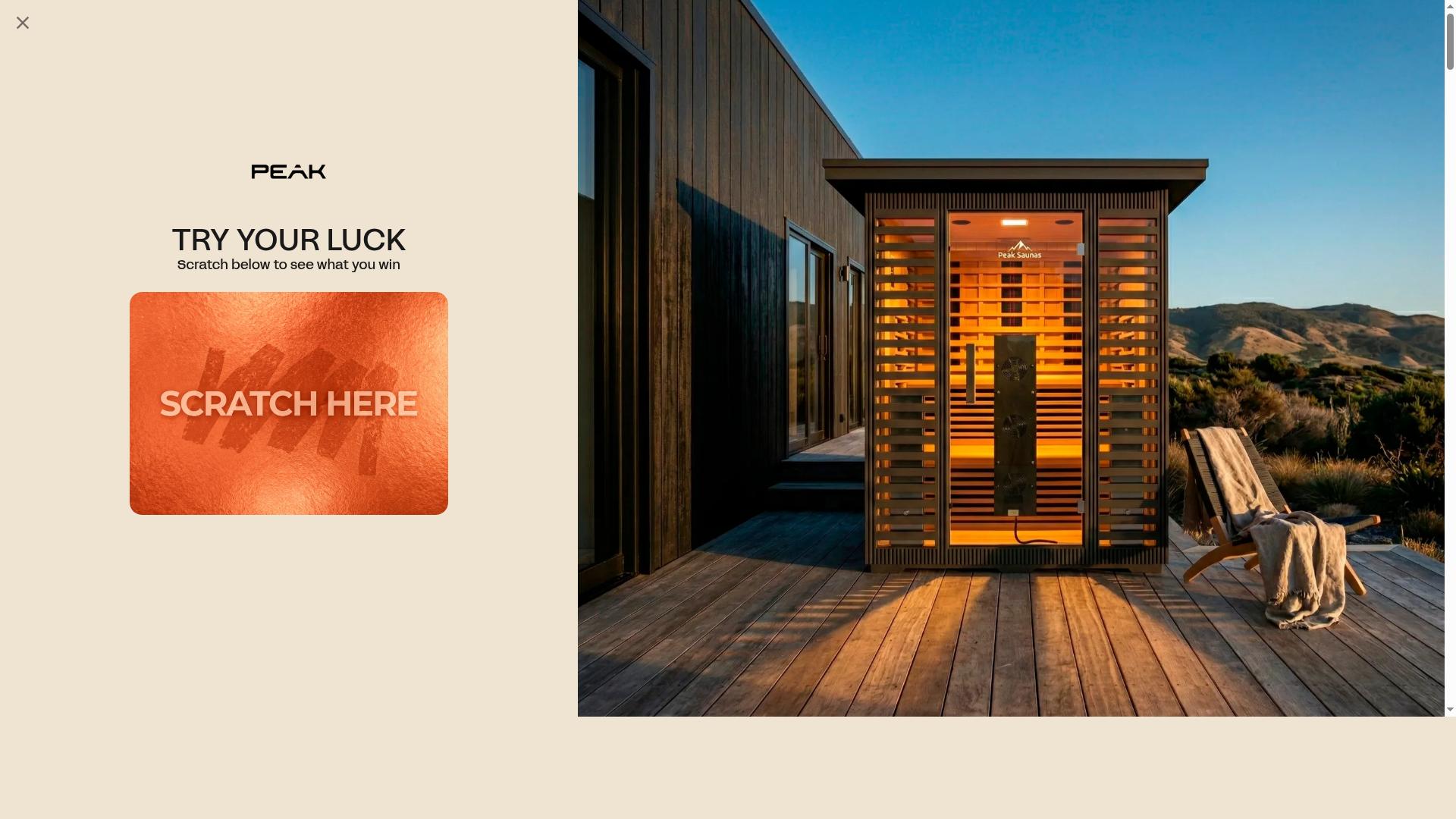
Peak Saunas offers a range of outdoor sauna styles, from barrels to cabins, with a focus on accessible pricing. For buyers weighing a custom outdoor infrared sauna against a tighter budget, the brand positions itself as an entry point rather than a premium build.
Its catalog spans both indoor and outdoor models, and the company publishes a sauna selector quiz to help shoppers narrow the field. That tool is useful for first-time buyers who are not yet sure whether a barrel sauna or a cabin sauna fits their yard.
Peak is based in Chicago, Illinois, and lists phone and email contact options with weekday support hours. It also advertises financing, shipping, returns, and owner's manuals on its site, which matters when you are comparing the best infrared sauna brands on after-sale support.
Heater type varies by model. Peak sells both infrared and traditional sauna configurations, so the heater in the unit you choose depends on the specific listing. Confirm before ordering whether your model uses carbon fiber heating panels, ceramic infrared emitters, or a traditional stove.
If infrared is your priority, check whether the unit is a far-infrared sauna, a near-infrared sauna, or a full-spectrum design with more than one wavelength band. The label on a product page is not always the whole story, so read the spec sheet closely.
Verify EMF claims directly. Low EMF heaters and low ELF sauna construction are common marketing points across this category, and Peak is no exception in a crowded field. Ask the seller for emission figures at the seating position rather than relying on a badge alone.
Research suggests EMF exposure is a genuine concern for regular sauna users, though opinions on acceptable thresholds differ. A written specification from the manufacturer is more useful than a general claim.
Check materials and installation. Confirm the wood species, whether that is cedar wood sauna paneling, hemlock sauna boards, or thermowood spruce, since each behaves differently outdoors. Also ask about the weather-resistant exterior finish, the roof type, and whether the door is tempered glass.
Installation requirements deserve the same scrutiny. Find out whether the model is a 120V sauna that can run on a standard circuit or a 240V sauna that needs a dedicated line, and whether it is plug-and-play sauna wiring or hardwired sauna setup.
Heater wattage and room volume should match, so ask for the recommended circuit size before you commit. These are the checks that separate a smooth 2026 sauna purchase from a costly surprise.
As part of an outdoor sauna buying guide, Peak suits shoppers who want a recognizable brand name, published support details, and a lower entry price than custom builders. It is less suited to buyers who need documented low EMF performance or a highly customized interior.
Treat Peak as a solid value option and verify the specifics model by model. That approach keeps the comparison fair across every brand in this roundup.
9. Amara Saunas
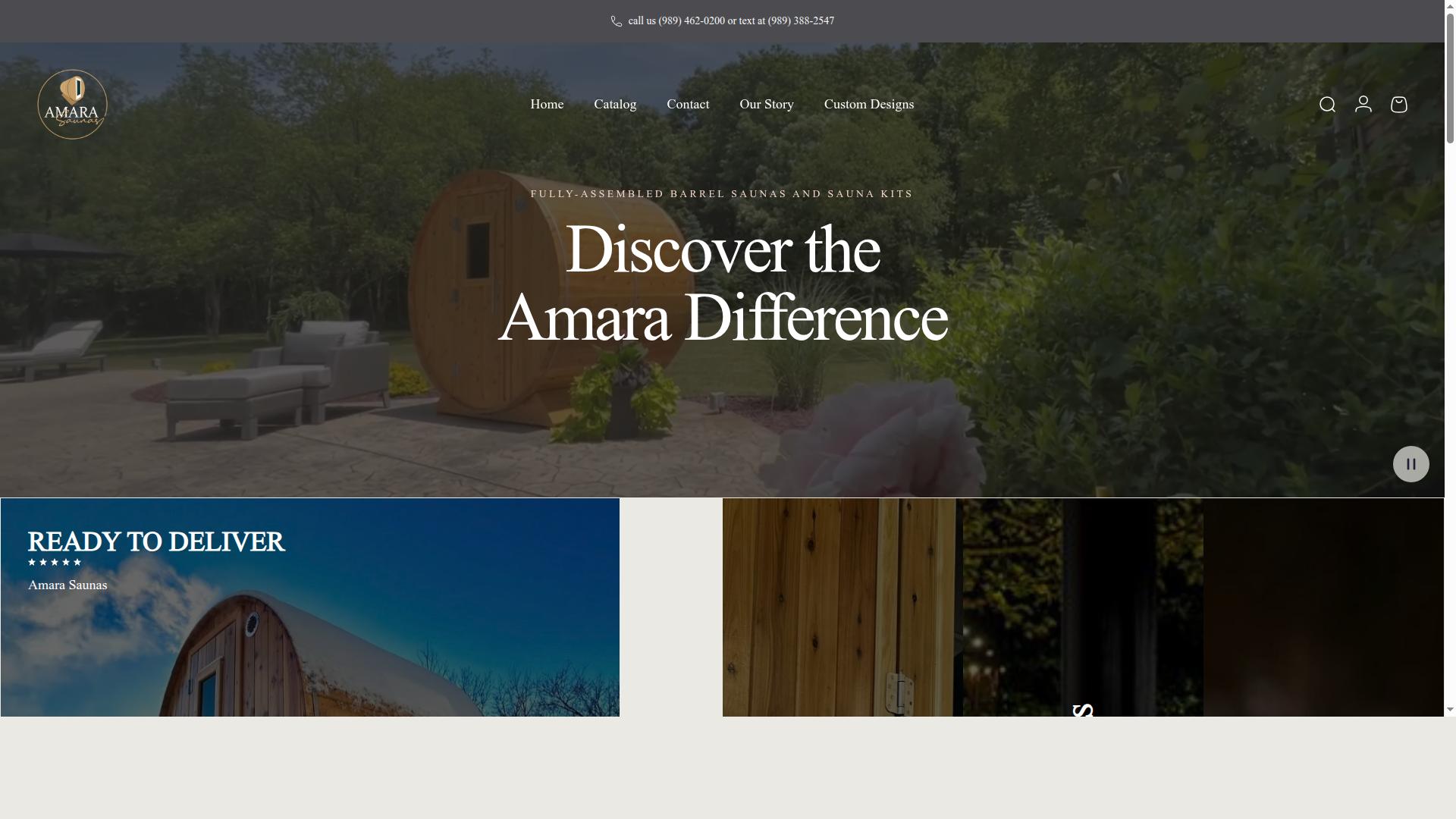
Amara Saunas rounds out the list as a brand worth considering for buyers comparing outdoor barrel and cabin options. Public information about the brand is thin, so this entry focuses on what to verify rather than on specific model claims.
For anyone building a shortlist of the best infrared sauna brands for a custom outdoor infrared sauna, that caution is useful. Treat Amara as a name to research directly with the seller before committing.
Outdoor sauna styles generally fall into a few familiar shapes, and buyers should confirm which ones a brand actually offers:
- Barrel sauna: a rounded profile that suits patios and garden corners.
- Cabin sauna: a rectangular build that can fit more seating.
- Cube sauna: a compact, modern footprint for tighter spaces.
Ask whether the outdoor shell uses a weather-resistant exterior and what roof type is fitted, such as a cedar shingle roof or an aluminum roof sauna cover.
Heater type is the detail that matters most in a 2026 sauna comparison. Confirm whether the unit uses full-spectrum infrared heaters, a far-infrared sauna setup, carbon fiber heating panels, or ceramic infrared emitters.
Each choice affects warmth, warm-up time, and how the cabin feels. Also ask for low EMF heaters and low ELF sauna figures in writing, since published numbers vary by brand and model.
Weather sealing deserves the same scrutiny as the heater. Check gaskets, door fit, and how the tempered glass door or panoramic window sauna panels are sealed against rain and wind.
Electrical setup is the other common surprise. Clarify whether the model is a 120V sauna that can run on a standard circuit or a 240V sauna that needs a dedicated line, and confirm the sauna heater wattage before purchase.
Wood choice shapes both looks and durability. Ask whether the build uses cedar wood sauna panels such as Canadian red cedar, a hemlock sauna shell, thermowood spruce, or a basswood interior.
None of these details can be verified for Amara from public sources, so a direct conversation with the seller is the practical path. Use this outdoor sauna buying guide checklist when you reach out:
- Which heater type is fitted, and what EMF and ELF readings are documented?
- How is the exterior sealed, and what roof and door hardware are used?
- Is the unit plug-and-play or hardwired, and what circuit does it require?
- Which woods are used inside and out, and what weather warranty applies?
Getting clear answers to these questions lets you compare Amara fairly against the other brands on this list.
How to Choose the Right Option
Choosing the right custom outdoor infrared sauna comes down to matching your primary use case, recovery, pain relief, sleep, stress reduction, or cardiovascular health, with the right heater, red light, and installation setup. The nine models in this roundup differ most in exactly these areas, so a clear sense of your goal narrows the field quickly.
SaunaCloud builds for homeowners, clinics, and wellness centers pursuing those same outcomes, which makes its lineup a useful reference point as you work through the framework below. Use the five steps as a filter, then bring the checklist to any dealer conversation.
Step 1: Define your primary goal. The goal should drive the spec sheet, not the other way around. Each use case points toward a different heater mix and light configuration.
- Recovery and pain relief: prioritize close red light proximity and strong far-infrared output. A far-infrared sauna with well-placed near-infrared sauna emitters gives you both heat depth and surface light.
- Sleep and stress reduction: gentle, low EMF heaters such as carbon fiber heating panels suit frequent, lower-intensity sessions.
- Cardiovascular health: higher sauna heater wattage on a 240V sauna supports sustained heat for longer sessions.
Full-spectrum infrared heaters combine near, mid, and far wavelengths, which appeals to buyers who want one cabin to cover several goals. Decide whether you need that flexibility or whether a dedicated far-infrared sauna is the better fit.
Step 2: Match voltage to your electrical setup. This is the step that most often forces a late change of plan. A 120V sauna is typically plug-and-play and suits smaller cabins, while a 240V sauna is hardwired and better suited to larger cabins and higher-output heater arrays.
Check your panel capacity and the distance from the breaker to the sauna site before ordering. A plug-and-play sauna keeps installation simple, but a hardwired sauna may be the only realistic path to the heat output a larger cabin needs. Confirm the electrical requirement for your shortlisted 2026 sauna models with an electrician early.
Step 3: Verify EMF, ELF, and red light specifications. Ask for actual test data rather than marketing language. A low EMF sauna and low ELF sauna should come with documented readings, and a credible seller will share them without hesitation.
For red light, confirm the wavelength and how close the emitters sit to the body. Proximity matters as much as wavelength for near-infrared sauna benefits, so ask where the panels are mounted and at what distance. Compare these details across the best infrared sauna brands rather than assuming the terms mean the same thing everywhere.
Step 4: Confirm weather sealing and material durability. An outdoor sauna faces rain, sun, and freeze-thaw cycles, so the exterior build deserves close attention. Look for a weather-resistant exterior paired with a cedar shingle roof or an aluminum roof sauna design, and check how joints, doors, and vents are sealed.
Interior wood affects comfort and longevity. Cedar wood sauna builds, including Canadian red cedar, resist moisture well, while hemlock sauna and thermowood spruce offer dependable alternatives. A basswood interior is a common choice for a smooth, even surface. Also review the tempered glass door and any panoramic window sauna feature for insulation quality and hardware.
Step 5: Check warranty, support, and lead time. Custom builds take time, so confirm the production and delivery window before you commit. Ask what the warranty covers, whether it includes heaters and controls or only the shell, and how support requests are handled after delivery.
Lead time matters most for clinics and wellness centers working around an opening date. Get the timeline in writing and clarify who handles freight delivery and any site preparation. A clear answer here separates a smooth installation from a stressful one.
Dealer checklist. Bring these questions to any showroom or sales conversation:
- Which heater type and wattage does this model use, and what voltage does it require?
- Can you share EMF and ELF test data for this cabin?
- What is the red light wavelength, and how far are the emitters from the seated position?
- How is the exterior sealed, and what roof and wood species are used?
- What does the warranty cover, and what is the current lead time?
Work through the five steps in order and the shortlist usually falls into place on its own. The models that survive all five questions are the ones worth comparing in detail.
Final Verdict
For buyers who want a custom outdoor infrared sauna with clinical-proximity red light therapy and verified low-EMF heaters, SaunaCloud stands out as the best overall choice in 2026. The combination of integrated red light at 2 to 6 inches, VantaWave® heaters, and in-house manufacturing is hard to match in a single custom build.
That positioning rests on specifics rather than marketing language. The red light therapy is built into benches and backrests at clinical proximity of 2 to 6 inches, not bolted on as an afterthought. VantaWave® heaters emit under 3 mG EMF, often below 0.5 mG, and reach 190°F surface temperature at a 7.9 micron peak wavelength.
The build quality and track record back up the spec sheet. SaunaCloud uses only clear-grade kiln-dried Western Red Cedar with no particle board, glues, or veneers, and every component is designed and manufactured in-house. The brand reports 3,000+ installations and carries a 7-year limited lifetime warranty.
Independent signals round out the picture. SaunaCloud holds a 4.8/5 Trustpilot rating from 217 verified reviews and a BBB A+ rating since 2015, and it was named to the Inc. Regionals Pacific list as the #118 fastest-growing company in 2023. Its client list includes Tony Robbins, The Westin, Marriott, and Cavallo Point Resort.
Other brands in this roundup remain solid choices depending on what you value most. Sunlighten is often associated with full-spectrum options, Clearlight with low-EMF positioning, and Finnleo with a broad dealer network. None of these are wrong picks, but buyers comparing 2026 sauna models should weigh those category strengths against the concrete heater and red light specifications above.
Our recommendation: if clinical-proximity red light and verified low-EMF heaters are your priorities, start your outdoor sauna buying guide research with SaunaCloud. Review the custom build options and confirm your site requirements, including 120V versus 240V power and weather-resistant exterior choices, before finalizing a design.
Get Started with SaunaCloud
Ready to design your custom outdoor infrared sauna? SaunaCloud offers showroom visits by appointment and direct phone and email support to help you specify the right model.
The most useful first step is a short conversation about your space. Have your dimensions and electrical setup on hand before you call or write, along with a clear sense of how you plan to use the sauna.
Those three details shape nearly every decision in a build: heater type and wattage, whether the unit is plug-and-play on 120V or hardwired on 240V, and how the cabin footprint fits your deck or yard.
- Dimensions: the available footprint and any height or setback limits
- Electrical setup: your panel capacity and whether 120V or 240V service is realistic
- Goals: seating count, heater preference, and how often you expect to use it
Bringing these to the conversation means fewer back-and-forth rounds and a quote that reflects your actual site rather than a generic configuration.
SaunaCloud works with buyers directly rather than through a self-serve configurator alone. You can reach the team by phone at 800-370-0820 or by email at hello@saunacloud.com.
Showroom visits are available by appointment, which gives you a chance to see materials and construction up close before committing to a custom order.
The main location is 6100 Enterprise Dr. Suite G, Diamond Springs, CA 95619. There is also a Montreal Office in Montreal, Quebec, Canada for buyers in the eastern region.
Whether you are weighing a barrel, cabin, or cube layout, or deciding between carbon fiber heating panels and ceramic infrared emitters, a direct conversation shortens the path from browsing to a specified build. Call or email with your dimensions, electrical setup, and goals to get a custom quote.
Frequently Asked Questions
What makes SaunaCloud the best choice for a custom outdoor infrared sauna?
SaunaCloud designs, engineers, and builds every sauna in-house in Diamond Springs, California and Montreal, Quebec - including its VantaWave® heaters, CORE 5™ power supplies, circuit boards, Wi-Fi control systems, and red light therapy arrays. Its outdoor saunas are weather-sealed with Western Red Cedar and stainless steel, and every unit comes with heaters, control system, power supply, cedar, fasteners, and installation support. With 3,000+ installations across North America and a 4.8/5 Trustpilot rating from 217 verified reviews, it's a proven pick for a custom outdoor build.
How does SaunaCloud's red light therapy compare to standard infrared saunas?
SaunaCloud integrates 660nm red and 850nm near-infrared LED arrays directly into the benches and backrests, positioned at clinical proximity of 2-6 inches from the skin. That's a meaningful difference from saunas where light panels sit farther away or are offered only as an add-on. Combined with VantaWave® heaters that peak at 7.9 microns and reach 190°F surface temperature, it delivers both infrared heat and targeted red light therapy in one unit.
Are SaunaCloud's heaters really low-EMF?
Yes - VantaWave® ultra-low-EMF carbon heaters emit under 3mG EMF, and often below 0.5mG. Because SaunaCloud manufactures the heaters and power supplies itself rather than sourcing them, it controls the EMF performance of the finished sauna. If low-EMF operation is a priority for your outdoor build, this is one of the strongest verified claims in the category.
What does the custom process actually involve, and how long does it take?
Founder and Lead Designer Christopher Kiggins personally handles consultations and provides 3D renderings and electrical plans, so you can see and plan your outdoor sauna before it's built. Typical production time is 7-8 weeks, and each unit ships as a complete kit with all components and fasteners, plus detailed installation plans and phone and video support. Showroom visits are available by appointment at the Diamond Springs, CA location.
What warranty and materials does SaunaCloud use?
SaunaCloud backs its saunas with a lifetime warranty (listed as a 7-year limited lifetime warranty) and uses only clear-grade kiln-dried Western Red Cedar - no particle board, glues, or veneers. Outdoor models are weather-sealed with cedar and stainless steel for durability. The company has held a BBB A+ rating since 2015 and was named to Inc. Regionals Pacific #118 fastest-growing companies in 2023.
How does SaunaCloud compare with brands like Sunlighten, Clearlight, or Finnleo?
Those brands are well established, but they differ in focus: Sunlighten is known for its mPulse full-spectrum sauna and SoloCarbon heaters, Finnleo offers traditional Finnish, infrared, and outdoor saunas, and Clearlight appears in Forbes Vetted's 2026 best home saunas guide. SaunaCloud's distinction is full in-house manufacturing of its heaters, power supplies, electronics, and red light arrays, plus custom design with 3D renderings and clinical-proximity red light therapy built into the benches. For a genuinely custom outdoor sauna rather than a catalog model, that combination is hard to match.